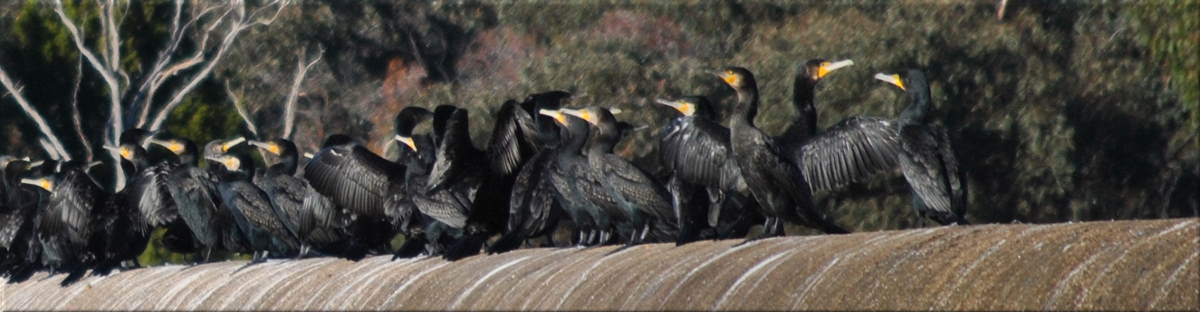
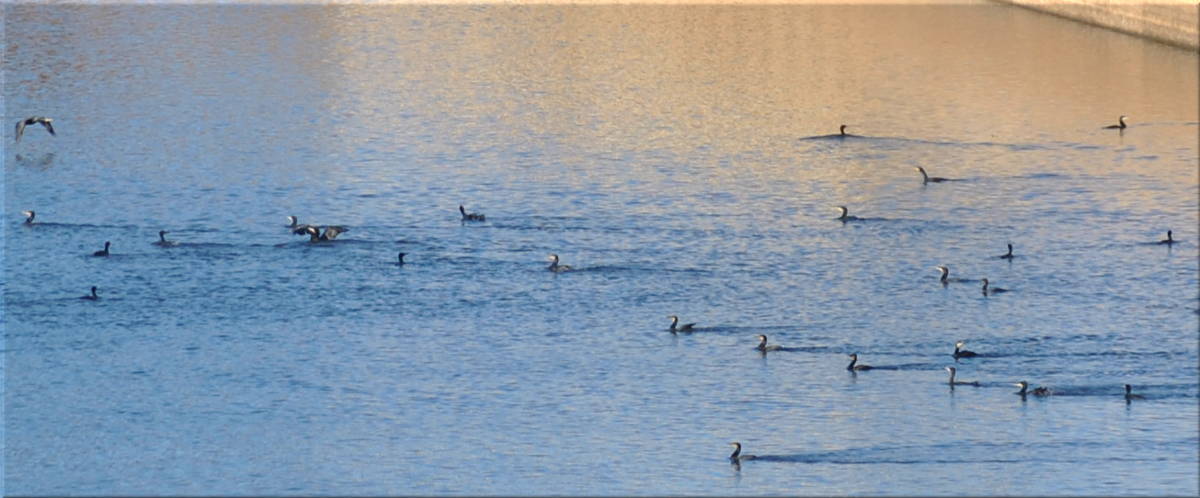
I’d never seen so many cormorants in one place before. Earlier, before these photos were taken with the Nikon D3000, the water fairly boiled with the ducking and diving going on as the Great Cormorants fished. The number of birds dwindled as the sun rose, and they didn’t particularly like me close.

cormorants

I found a site – Do you know your cormorants? for identification, since I’ve grown up calling all types the generic ‘shag’. Waterbirds didn’t feature in my youthful bird-watching days – apart from the ones which visited farm dams.
cormorants3

The Great Cormorant is all black with a yellow patch on its face. Apparently, during breeding season, the yellow is bordered by white, and a white patch appears on the flanks
cormorants2

Range: North America, Europe, Africa, Asia, New Zealand, Papua New Guinea and Australia.

cormorants4

Thanks for looking.

🙂

Birds

Phalacrocorax carbo: Great Cormorants

Image

rocklands_dam_wall

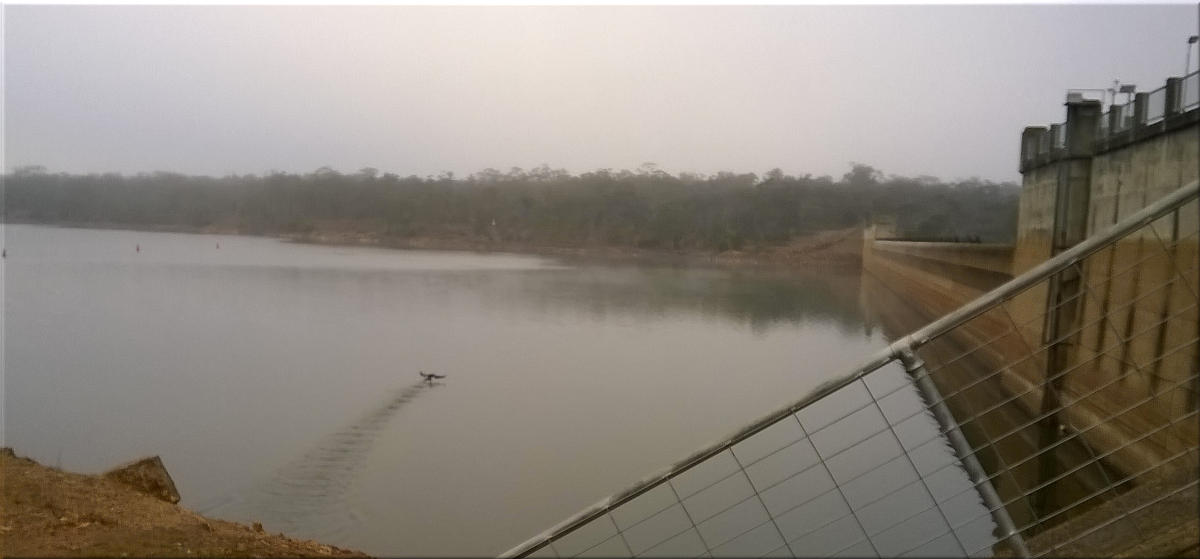
Wikipedia says… “Rocklands Reservoir is a popular recreational boating location; with powered boating, water skiing and jet skiing allowed. Camping is permitted in designated areas. During the duck hunting season, duck shooting is allowed, it is also a popular fishing spot with Murray cod, Redfin, Trout and Carp taken regularly at all times of the year, Rocklands had a reputation as one of the premier carp fishing destinations in the late 90’s and early 2000’s with 10 kg+ carp taken regularly.”

rocklands_dam_wall3

I loved watching the cormorants fish. They launched from the curved spillway wall and it was there, when the sun rose, that masses of them lined up, drying their wings.  My old Nokia Lumia camera phone couldn’t do that particular sight justice.

rocklands_dam_wall4

For this next photo, I’m on the walkway right on top, near the castle-like part. The Glenelg River appears on the other side, getting on with it’s journey to the sea. An intricate system prevents carp, and their eggs, from going downstream.

rocklands_dam_wall5

Work started on the Rocklands Reservoir in 1938 but construction was distrupted by WW2.  Picking up again in 1950, the ungated, gravity-fed dam wall and embankments were completed in 1953 – a few years before I was born. Nowadays, it supplies both agricultural and environmental needs as water levels permit.

rocklands_dam

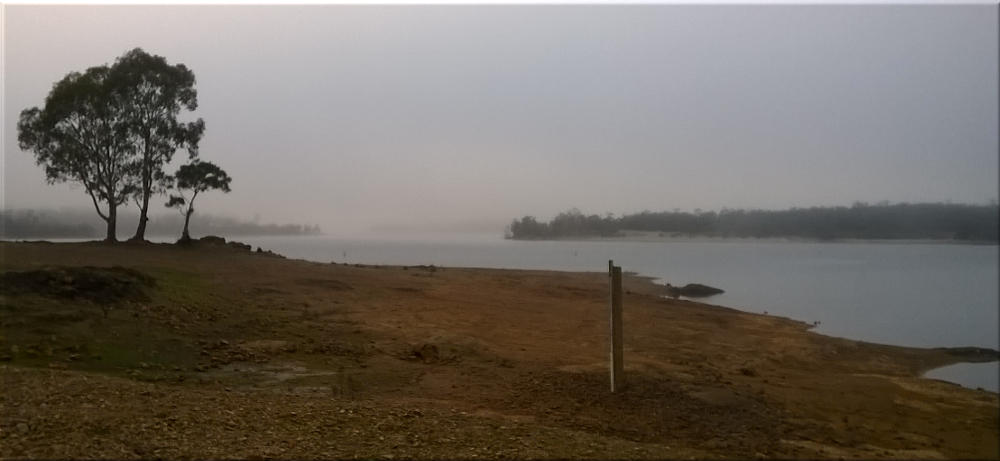
It was only about 28% full when we visited last month.

Thanks for looking.

🙂


Travels

The Spillway, Rocklands Reservoir

Image

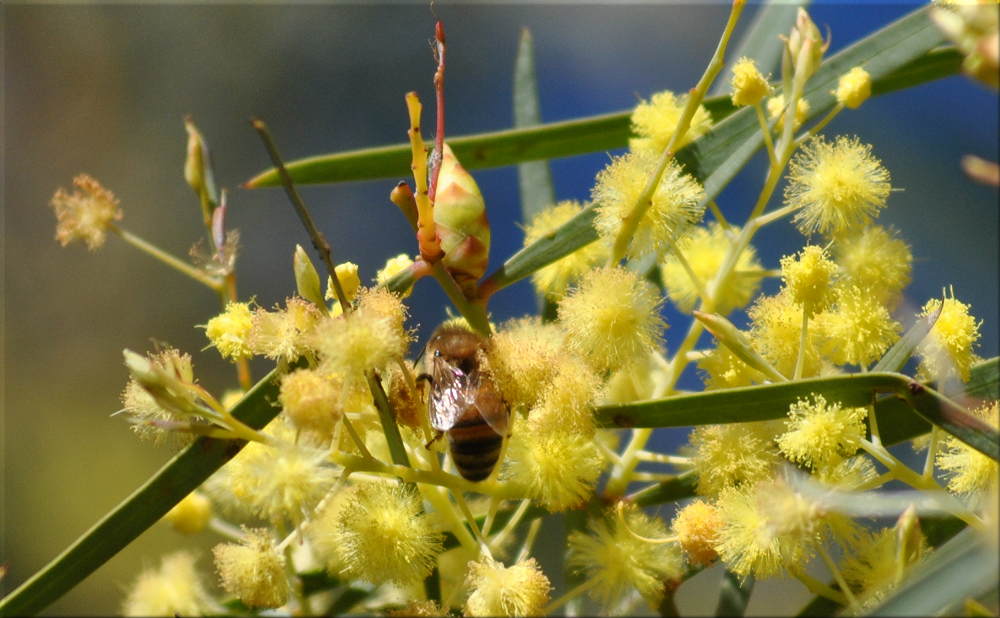
I’m still sharing that lovely sunny week from last month at Rocklands Reservoir. Being a bush setting, there was a a fair bit of flowering wattle. This one was in the caravan park right behind our camper. Only a few bees braved the cold.

bee_wattle

bee_wattle2

bee_wattle3

Thanks for looking.

🙂

Bees & Bugs

A Bee in the Wattle

Image