Butterflies & Moths, Sally D's Mobile Photography Challenge

Sally D’s Mobile Photography Challenge: The Red-spotted Jezebel

Over at Lens and Pens by Sally, the Mobile Phone Photography Challenge for the second Monday of the month is Macro.

While walking in the backyard the other day, I almost stepped on this butterfly. It didn’t look too agile, and barely flapped its wings, so I thought I had missed out on a vivid upper display. However, it turns out, the wings are only a silvery-grey on top, with wide black margins and the edging of white spots. The female has an extra black spot in the middle of the upper wings, but that part isn’t seen in my photos.
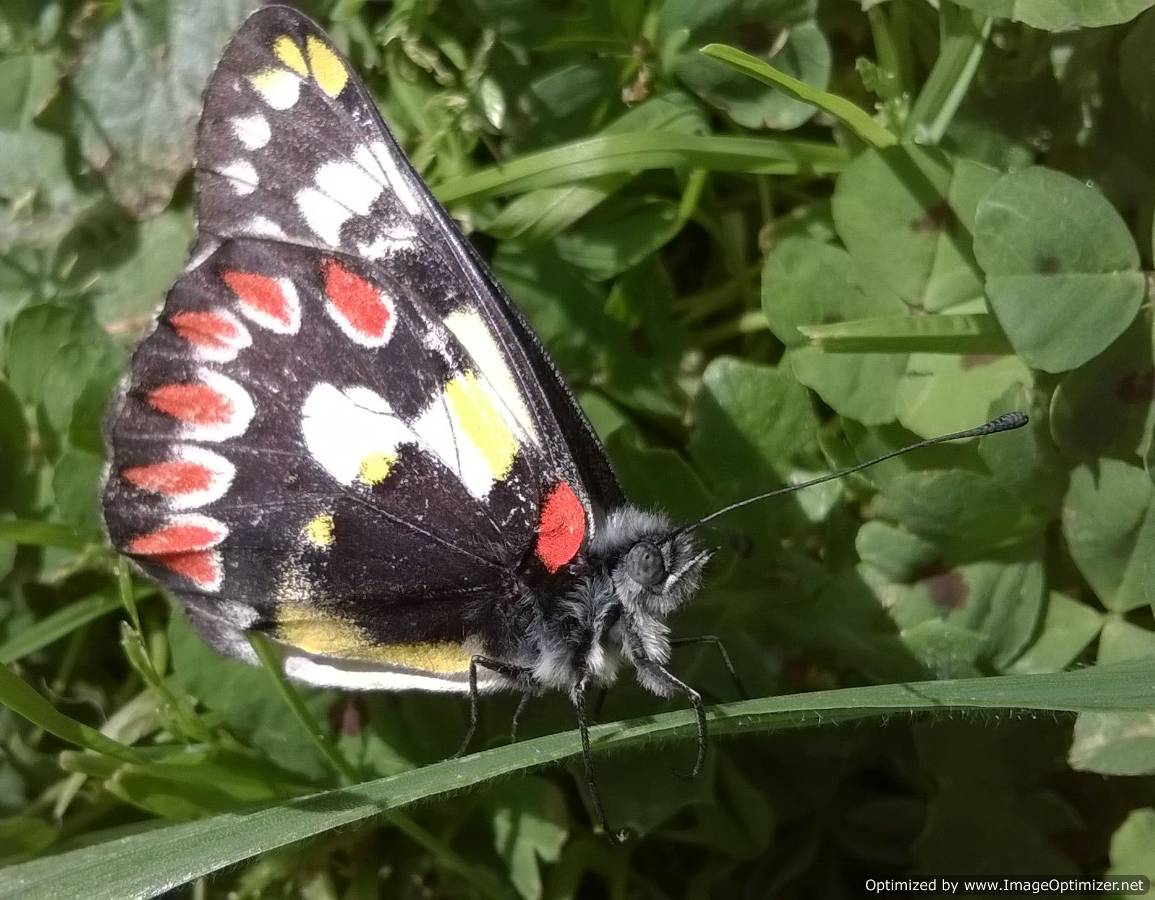
2015septbf1-Optimized

Nokia Lumia 520 windows phone, on auto

Click to enlarge.
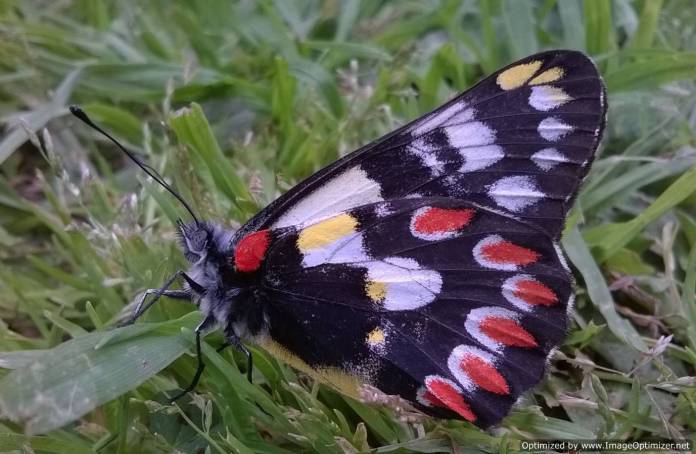
2015septbf4-Optimized

2015septbf3-Optimized

Nokia Lumia 520 windows phone, on auto

Wikipedia - public domain (delias aganippe)

Wikipedia says

The Wood White or Red-spotted Jezebel (Delias aganippe) is a butterfly in the family Pieridae. It is endemic to Australia. The wingspan is 60–70 mm. The larvae feed on Exocarpos, Santalum and Amyema species.

(Image is in the public domain)

In her post, Sally D discussed if it was possible to capture the passage of time in a single image.

The metamorphosis of a caterpillar into a butterfly takes time. But nothing will indicate the passage of time more, to me, when I attend my baby’s 40th birthday, next month. Wow! I can barely imagine how my mum feels when she has to acknowledge that she has a 60 year-old daughter.

I hope youse all have a great weekend.  ❤
Standard
Butterflies & Moths

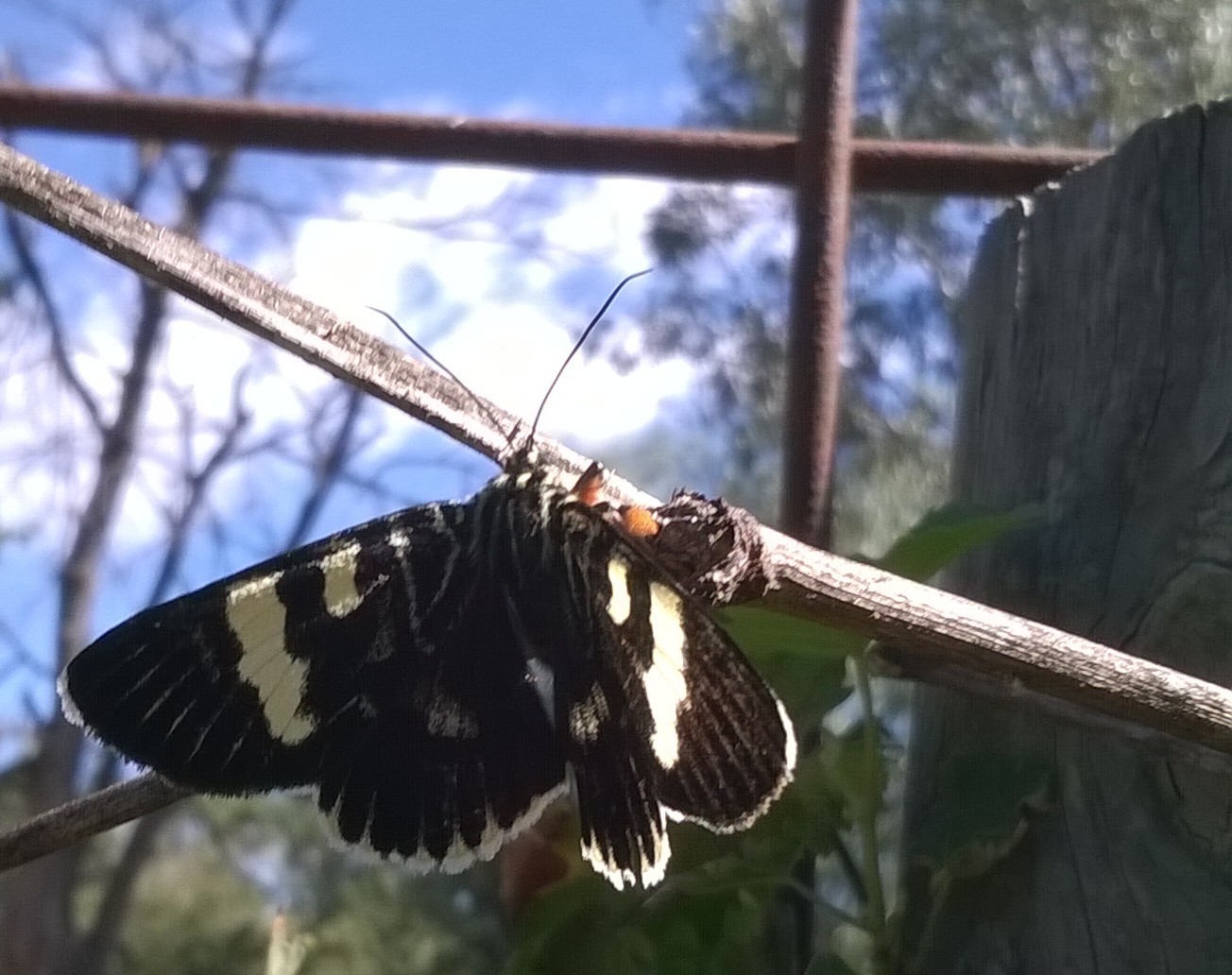
Aussie grapevine moth: Phalaenoides glycinae

Comocrus behri: The Mistletoe Moth

Photographed today on our grape vine, using my Nokia Lumia 530, 5mp windows camera, on auto, cropped. Click on any of the images and you will be taken to the gallery.

UPDATED next day: I’m wrong.  This is the Australian grapevine moth (Phalaenoides glycinae) …  I got sidetracked by the drawing!   (I haven’t even got mistletoe)

UPDATED: Here is what Wikipedia says about the right one:

The Australian grapevine moth (Phalaenoides glycinae) is a moth of the Noctuidae family. It is endemic to the south-eastern half of Australia, but is an invasive species in many parts of the world, including Canada and South Africa. The wingspan is about 50 mm. The larvae mainly feed on Parthenocissus quinquefolia, Hibbertia obtusifolia, Amyema gaudichaudii, Epilobium ciliatum, Fuchsia and Oenothera species, but mainly Vitis vinifera, hence it is considered a pest.

800px-Indian_MynaThe Indian myna (Acridotheres tristis) was introduced into Australia in 1862 to deal with a number of insect pests including the grapevine moth. In this it was unsuccessful, and ironically the bird is now itself considered a pest in many parts of Australia.

I’ll leave this here, even though it is not the same moth. It is a terrific drawing and looks much the same.

This moth does not have the same furry legs and underbelly.

This moth does not have the same furry orange legs and underbelly.

Wikipedia says:

Comocrus behri (Angas, 1847) aka ‘Mistletoe Moth’, is widely distributed in southern Australia from Perth to Melbourne and adjacent to Bass Strait, occurring as far north as Derby, Western Australia, and Clermont and Rockhampton in Queensland. It may be seen during daylight hours hovering around mistletoe species such as Amyema miquelii, Amyema melaleucae and Amyema cambadgei growing on Casuarina and Eucalyptus trees. The adult moths feed on Eucalypus flower nectar,have a wingspan of some 58 millimetres and are basically black with white bands running through the wings. Males exhibit ‘hill-topping’ behaviour, flying to high points in the landscape and there encountering females ready for mating.
IMAGE: By Arthur Bartholomew (1834 – 1909) (English) (Artist, Details of artist on Google Art Project) [Public domain or Public domain], via Wikimedia Commons

Standard