
The cicadas are plentiful this year, providing a constant background noise all day and all night. Sometimes, it is really helpful to be partly deaf! Most years, all I see of them is a few discarded husks.


Pretty horrible, aren’t they, like a prehistoric beast. Apparently, Australia has 200 species of cicada. Only the males sing and each species has its own tune to attract a mate of the same type. They spend most of their life as a nymph underground – some species can spend several years there, maybe even 6 or 7 years – where they live on sap from plant roots, shedding skin as they grow.

I accidentally took a photo of the ground (as one does now and then) and found I had captured a cicada popping up out of the ground.
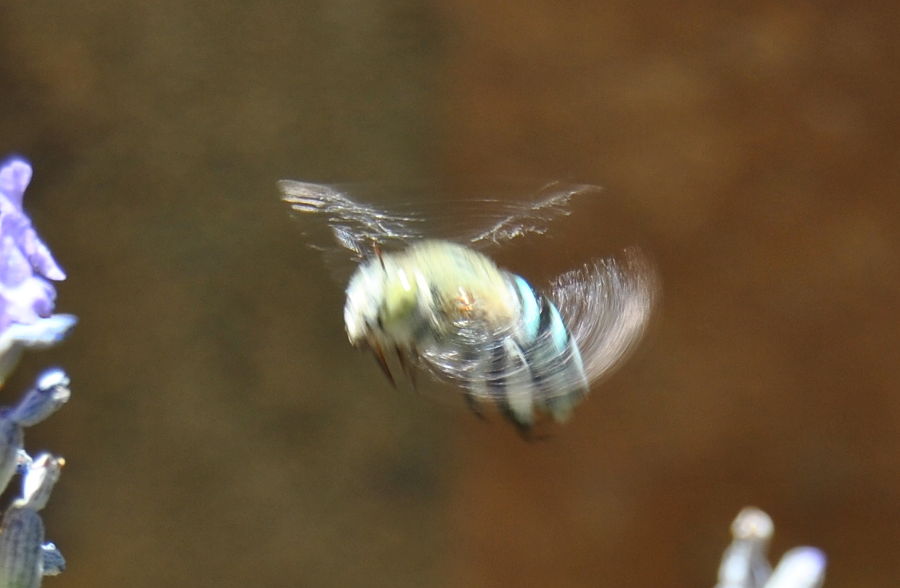
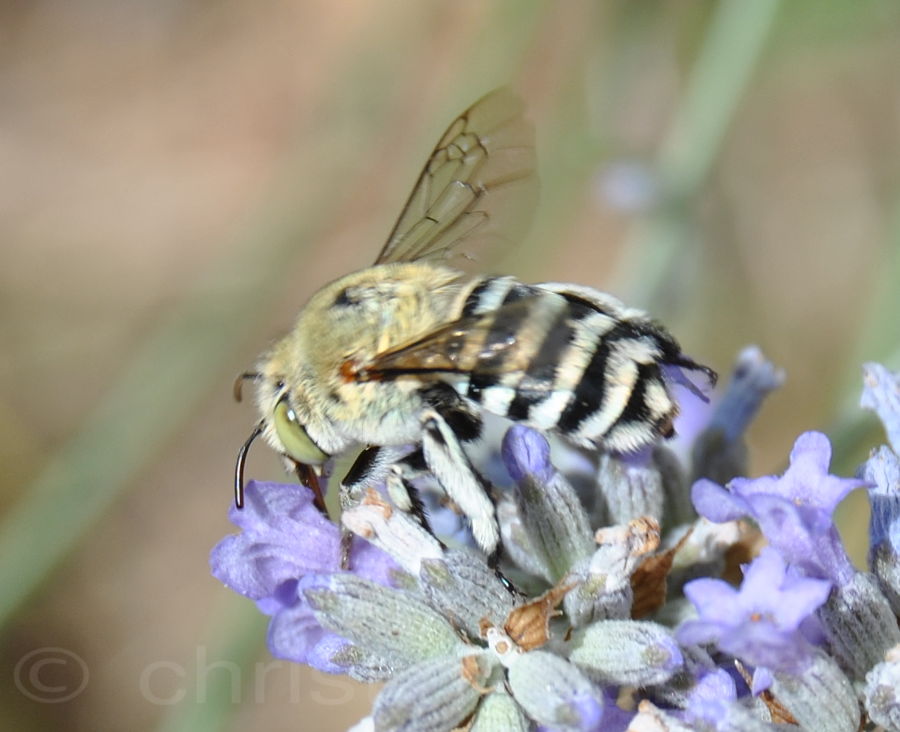
After climbing out, they shed their skin for the last time. This next one had climbed up a chair leg and as I moved the chair – sitting down to photograph bees in the lavender – the cicada fell off on to its back. I took a photo before I righted it. It was a different colour than I’ve seen before so I expect it has its final new skin. The wings take a couple of hours to harden.
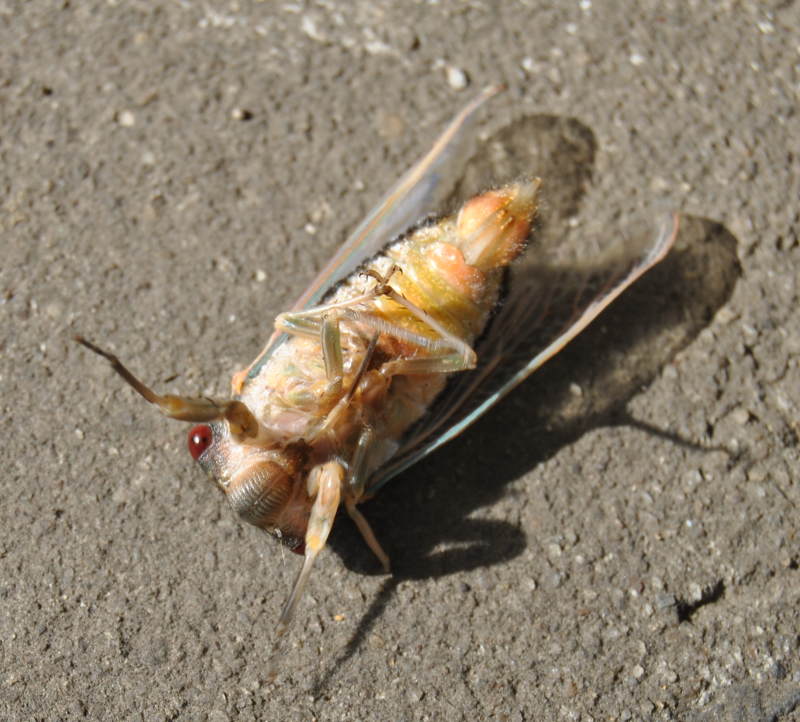
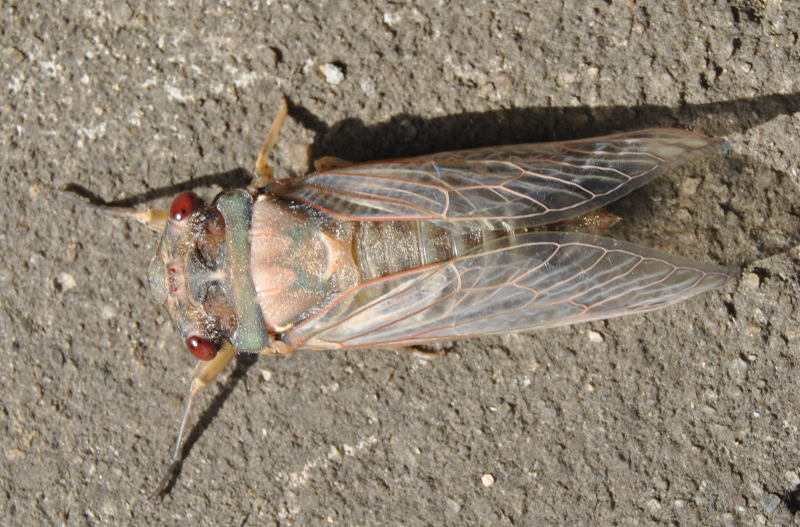
One more …
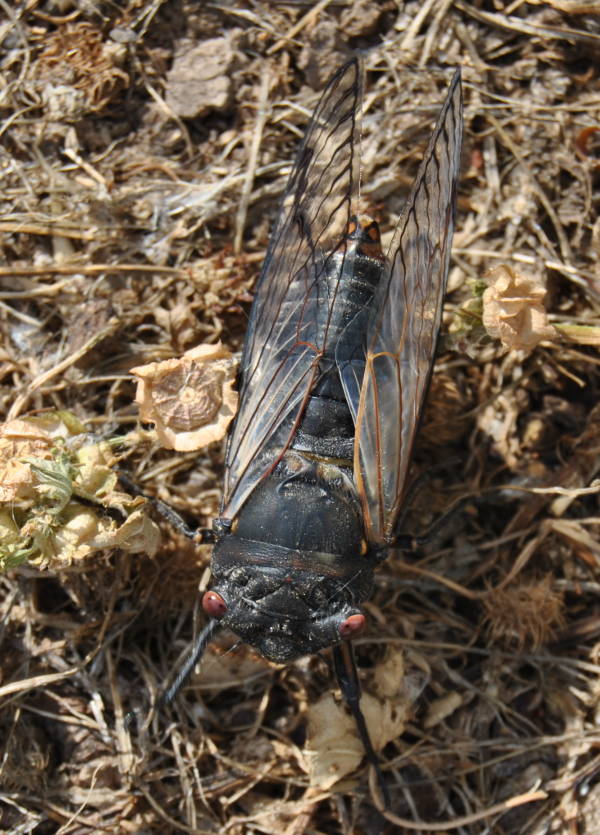
The Red Eye Cicada prefers eucalypts and the Australian Museum website advises one not to stand under a tree while they are feeding on sap since they excrete colourless droplets of waste. If numbers are high, there can be a constant spray of waste! From the sound, I reckon the property across the yard hosts thousands of them in their Australian native garden.
Do you ever have cicadas at your place? I never experienced them until I came here to central Victoria in the late 1990s. But then, I probably thought the sound was from crickets.
Thanks for reading.
Do have a great weekend. 🙂





You must be logged in to post a comment.