
Before Christmas, I borrowed a couple of books about beekeeping from the local library network. I wanted to learn to identify the bees in my photographs.
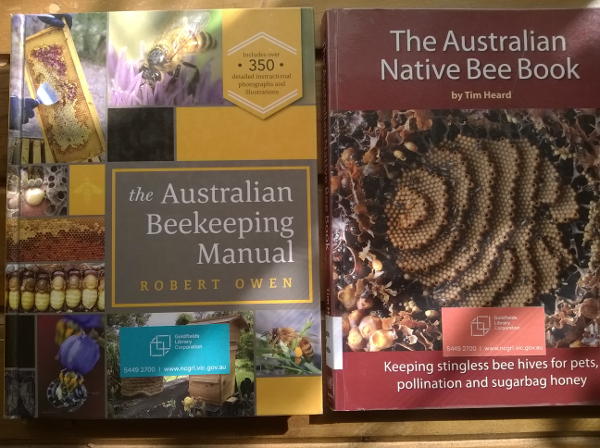
books borrowed from the library (Nokia Lumia 520)
The universe thought I wanted a swarm of my own for on my next walk, down the lane by our house, I encountered a very busy hollow in a roadside tree. No thanks.
The first thing I learned was that…
“In Australia, the name European honey bee is used to denote the Italian, Caucasian, Carniolan and dark German races of bees.”
(Robert Owen: the Australian Beekeeping Manual)
The book has lots of stunning pictures but I found it is next to impossible to identify the bee on my lilac-coloured rose. The first European bees weres introduced to Australia in 1822.
Robert Owen goes on to say…
“While the original four races of bees often have a different colour and possess different characteristic, the Australian honey bee is a mongrel mix of the four races.”

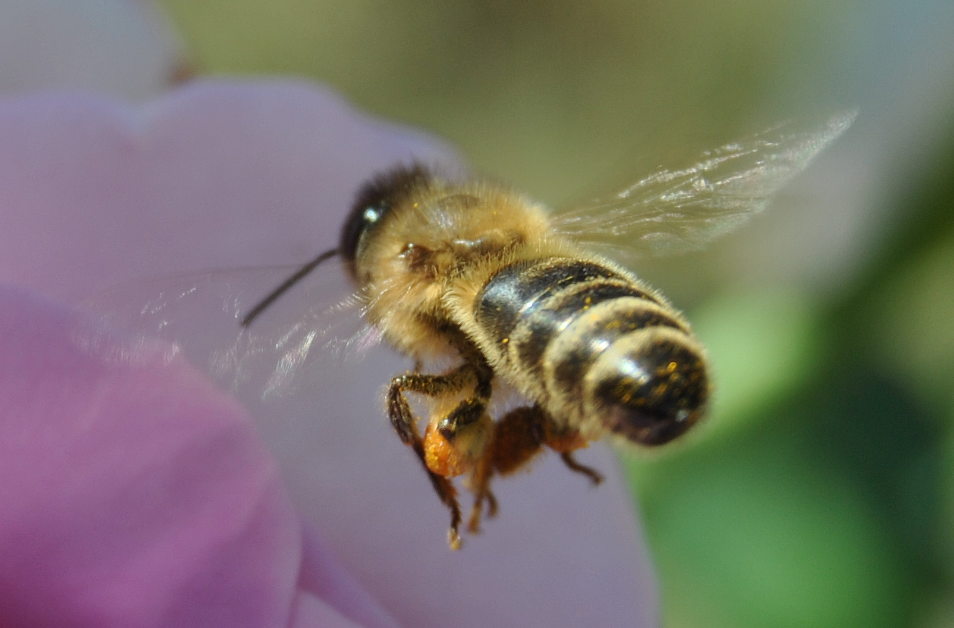
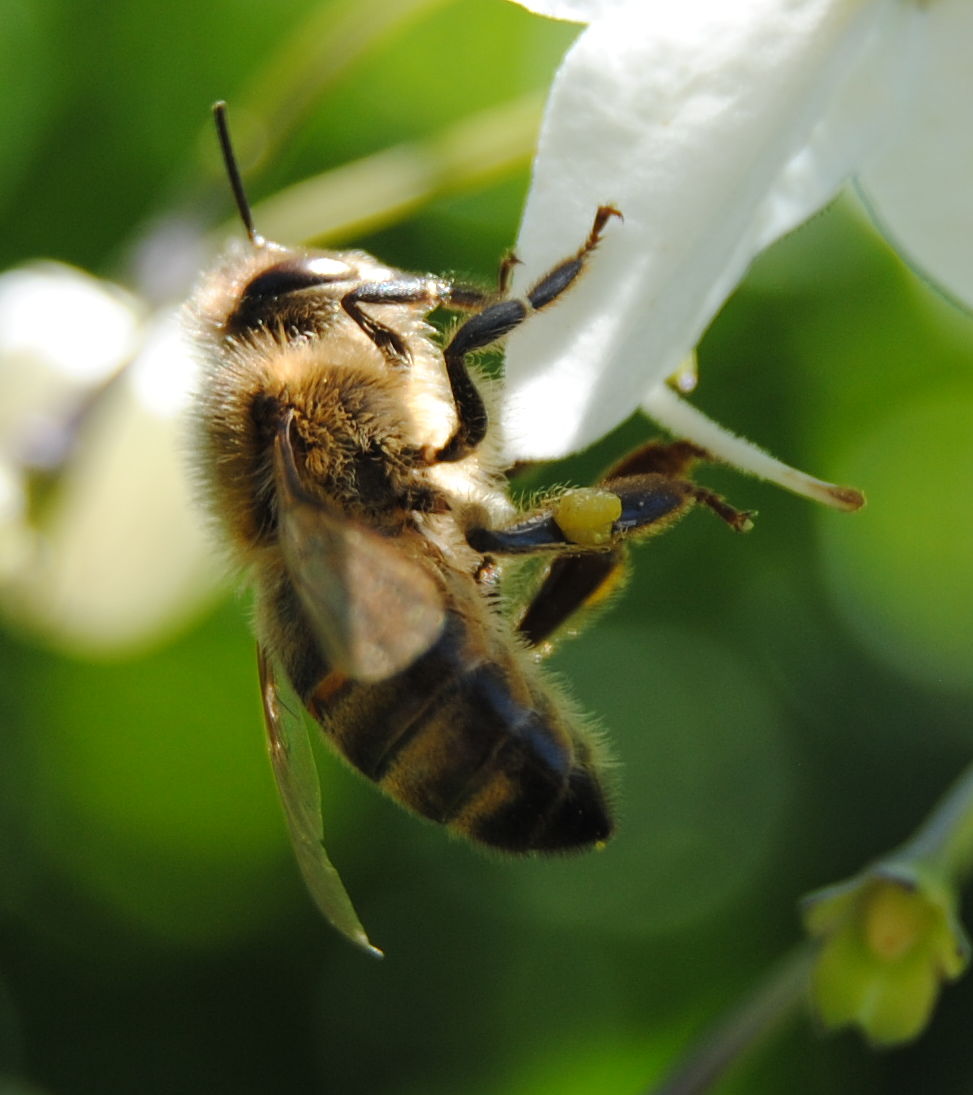
came out of the flower when I disturbed it, but flew back for more pollen
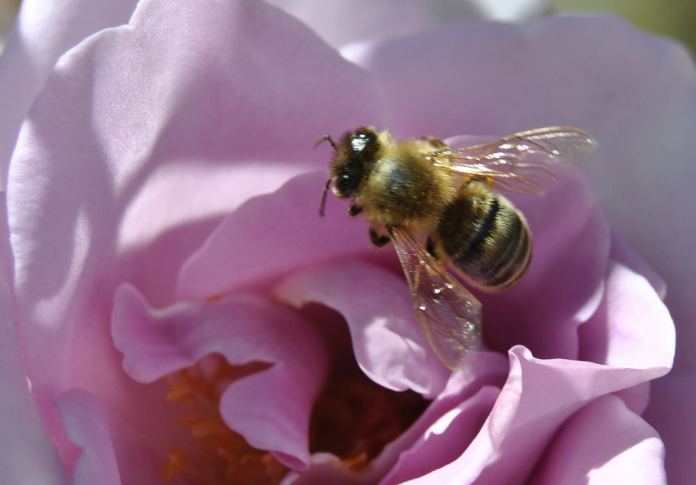
seemingly looking for something – the heart of the flower, perhaps?
The Italian honey bee has more of a yellow or straw colour than either the Caucasians or Carniolan bees. Turns out that most of our feral honey bees are genetically linked to Apis mellifera mellifera – the dark German bee, which is actually native to large areas of Europe.
Anyway, specific identification is near impossible then.

nope, not there… (Nikon D3000)
I wonder if the second book encourages me to keep stingless bees for sugarbag honey – whatever that is. Sounds intriguing. I’ll let you know.
🙂


 Christine R
You must be logged in to post a comment.