Bees & Bugs

The Honey Bee in Australia

Before Christmas, I borrowed a couple of books about beekeeping from the local library network. I wanted to learn to identify the bees in my photographs.
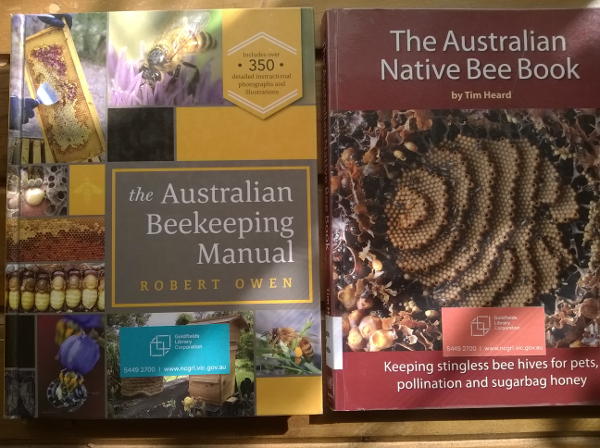
beebooks

books borrowed from the library (Nokia Lumia 520)

The universe thought I wanted a swarm of my own for on my next walk, down the lane by our house, I encountered a very busy hollow in a roadside tree.  No thanks.

The first thing I learned was that…

“In Australia, the name European honey bee is used to denote the Italian, Caucasian, Carniolan and dark German races of bees.”

(Robert Owen: the Australian Beekeeping Manual)

The book has lots of stunning pictures but I found it is next to impossible to identify the bee on my lilac-coloured rose. The first European bees weres introduced to Australia in 1822.

Robert Owen goes on to say…

“While the original four races of bees often have a different colour and possess different characteristic, the Australian honey bee is a mongrel mix of the four races.”

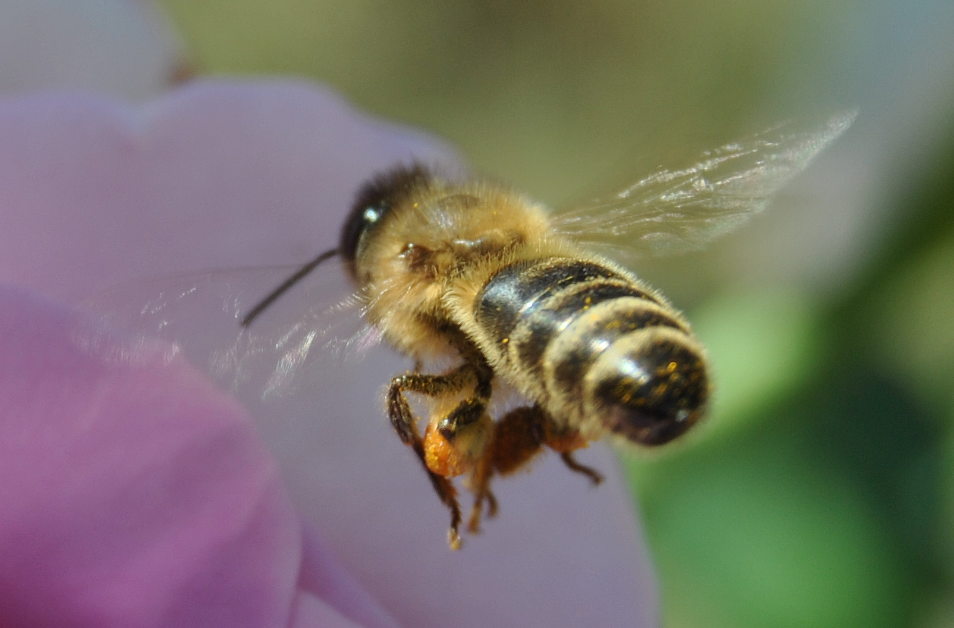
lilacbeefeat

came out of the flower when I disturbed it, but flew back for more pollen
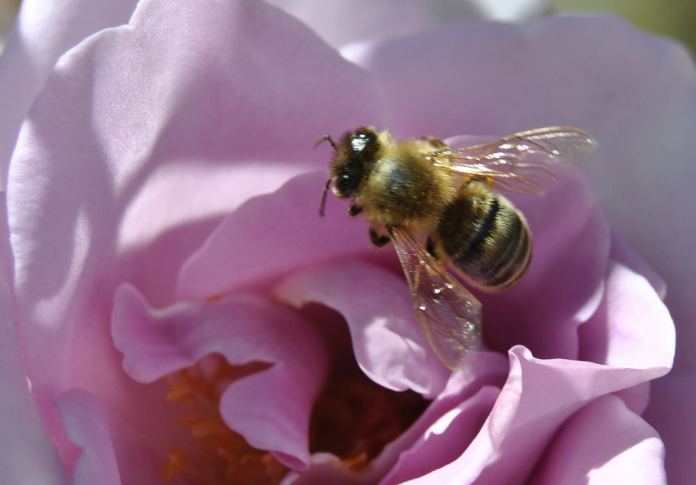
lilacbeedsc_2209

seemingly looking for something – the heart of the flower, perhaps?

The Italian honey bee has more of a yellow or straw colour than either the Caucasians or Carniolan bees. Turns out that most of our feral honey bees are genetically linked to Apis mellifera mellifera – the dark German bee, which is actually native to large areas of Europe.

Anyway, specific identification is near impossible then.

lilacbeedsc_2207

nope, not there… (Nikon D3000)

I wonder if the second book encourages me to keep stingless bees for sugarbag honey – whatever that is. Sounds intriguing. I’ll let you know.

🙂

Standard

Last year, I purchased a potted Magnolia from the supermarket. It is a little frazzled about the edges from the heat and I’ve been watching the two flower buds with some anxiety – sure they would wither and harden. A few days ago, the first one began to loosen and, yesterday, the flower opened on one side. Its lemon scent is heavenly.

magnoliadsc_2223

the lopsided flower with stamens fallen in a sepal.

magnoliapetaldsc_2224

stamens scooped in a sepal

I didn’t know about sepals until I was checking Wikipedia to make sure I was looking at stamens. On a magnolia, sepals are indistinguishable from petals so I’m guessing they are the first three at the base.

I moved overhead and looked down and saw more stamens piled in a second sepal. When I came back with the camera, the culprit was there, cavorting amid the stamens with pleasure.

magnoliabeefeatdsc_2195

cavorting in loose stamens

magnoliabeedsc_2197

looking for juicy bits

magnoliabee3dsc_2198

yummy yum yum

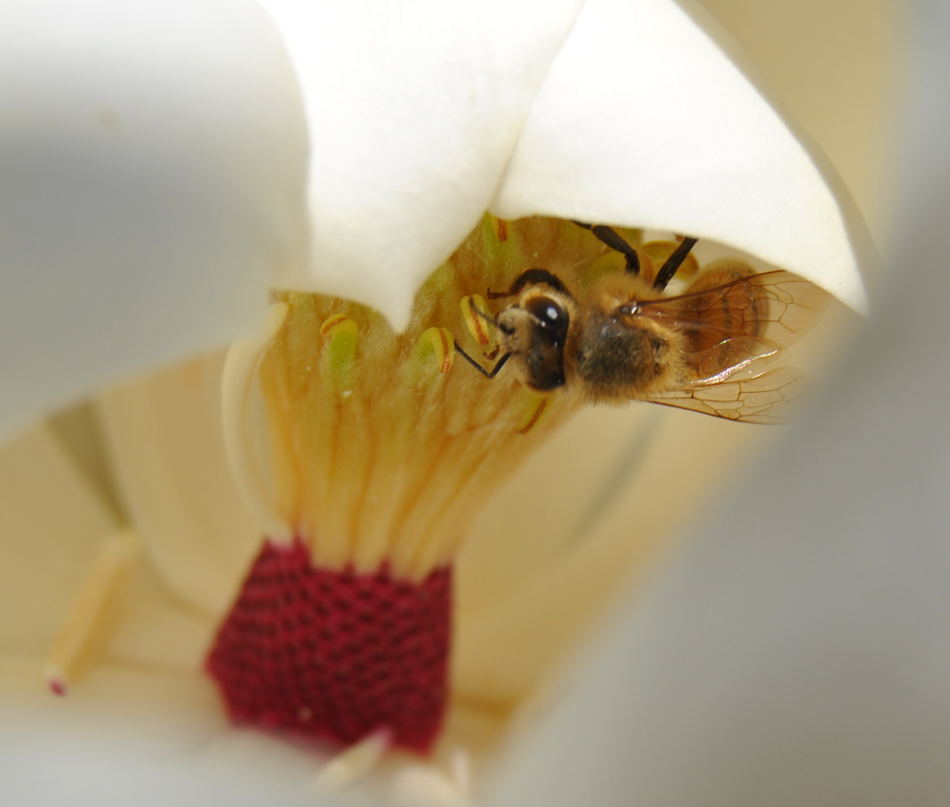
Curious, I cautiously moved the stem so I could see the heart of the flower.

magnoliabee4dsc_2212

red stamen scars and curly topped stigmas and a bee, of course

As I watched, this bee took out another stamen and it fell down to join the others.

Today, the flower looks like it spent our very warm night in a pot of tea. Just as well I hadn’t planted the poor thing. I’ll see how the second flower fares in another position.

Inside the flower, the curly bits are gone – replaced by what looked like some spiky red things to my nearly 62-year-old eyes. Apparently, I have a colourful fruit to look forward to. There are several little green bugs lurking inside the flower, too, so I know what my next photography session will be.

I can’t believe it has taken me this long to have a magnolia tree.

On writing…

I have moved past the revision block I’ve had for weeks. I’ve been stuck on lesson 7 and it’s an important one to make sure everything in my novel’s setting makes sense. I had trouble identifying the different things I needed to see during a read-through.

I doubted myself to the stage where I thought let’s just chuck in this whole being a writer thing.  But then I thought of my sister and the promise I made when she died. I will finish this. I will make this dream come true. Of course, I also thought of the money I had paid out to learn to revise in a productive way. I thank my lucky stars I chose to publish on Wattpad because I know some people already love my story despite its shortcomings. To paraphrase Holly Lisle –  it’s already as crappy as it’s going to get.

So, after lots of false starts, some tears, and piles of crumpled worksheets, I decided to do the analysis differently. I put the settings and other elements on index cards instead of using the worksheets. Down to business,finally, and I found myself filling out the worksheets instead of the cards. Huh? Go figure. I know I’m not filling them out exactly right, but the lesson is going to work how it should as I already see how my story start hasn’t carried through to the end as well as it could have.

Progress, at last. A little daunting, as I have quite a few settings and magical explanations to think about and 91 scenes to explore.

Thanks for being part of my journey.  ❤

Flowers, Taniel

My first magnolia flower

Image

The cicadas are plentiful this year, providing a constant background noise all day and all night. Sometimes, it is really helpful to be partly deaf!  Most years, all I see of them is a few discarded husks.

cicadahuskdsc_2192cicadahuskdsc_2194

Pretty horrible, aren’t they, like a prehistoric beast. Apparently, Australia has 200 species of cicada. Only the males sing and each species has its own tune to attract a mate of the same type. They spend most of their life as a nymph underground – some species can spend several years there, maybe even 6 or 7 years – where they live on sap from plant roots, shedding skin as they grow.

cicadadsc_2073

I accidentally took a photo of the ground (as one does now and then) and found I had captured a cicada popping up out of the ground.

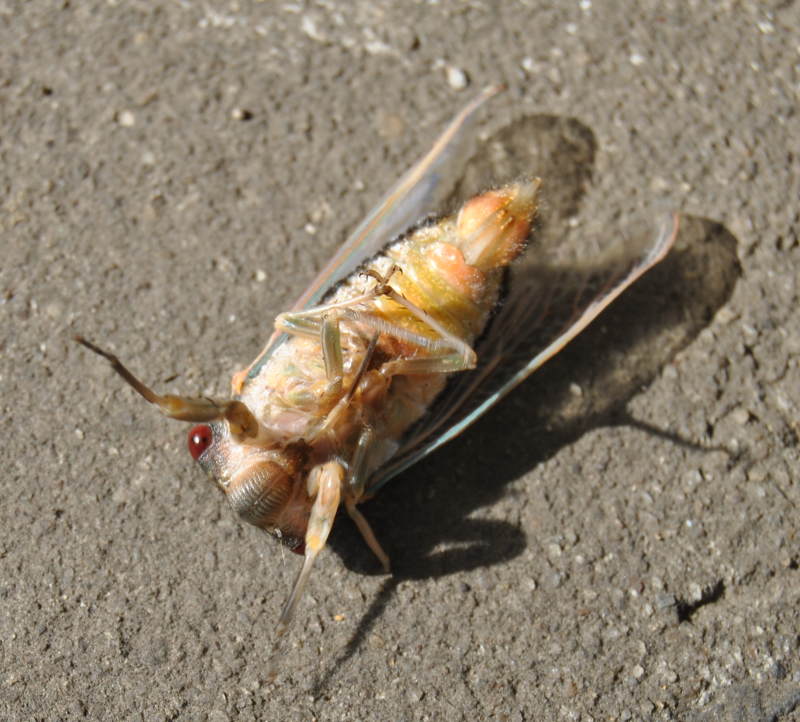
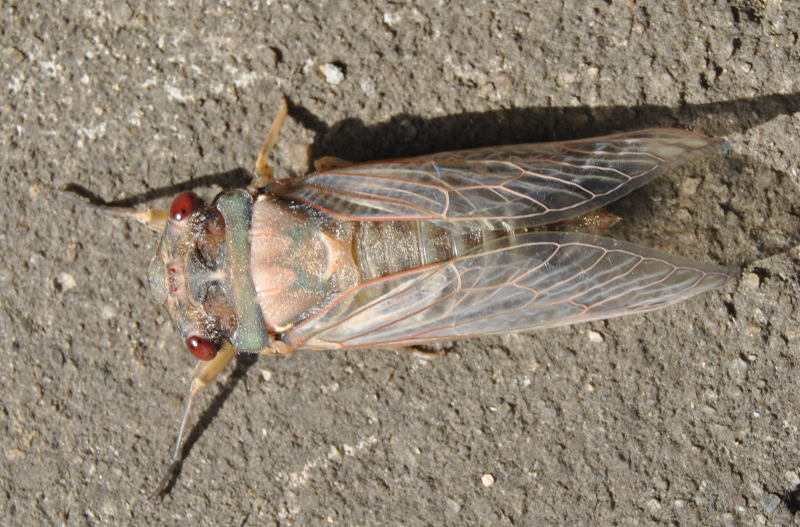
After climbing out, they shed their skin for the last time. This next one had climbed up a chair leg and as I moved the chair – sitting down to photograph bees in the lavender – the cicada fell off on to its back. I took a photo before I righted it. It was a different colour than I’ve seen before so I expect it has its final new skin. The wings take a couple of hours to harden.

cicadaonbackdsc_2187cicadapaledsc_2188

One more …

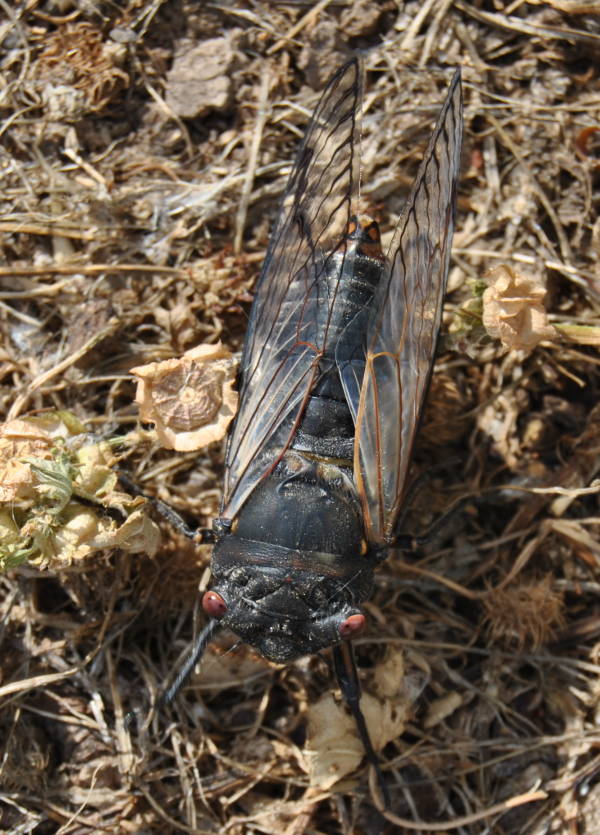
cicadadsc_2174

The Red Eye Cicada prefers eucalypts and the Australian Museum website  advises one not to stand under a tree while they are feeding on sap since they excrete colourless droplets of waste. If numbers are high, there can be a constant spray of waste! From the sound, I reckon the property across the yard hosts thousands of them in their Australian native garden.

Do you ever have cicadas at your place? I never experienced them until I came here to central Victoria in the late 1990s. But then, I probably thought the sound was from crickets.

Thanks for reading.

Do have a great weekend. 🙂

Other Stuff

Red Eye Cicada

Image