Birds

Platycercus elegans: Crimson Rosella

Taken yesterday with the Nikon D3000.

This one of the four crimson rosellas that often take refuge from the heat in the tree against our kitchen wall. Because of the spattering of olive colouring, this is an immature bird. They take about 15 months to reach full plumage.

Average size: about 34cm  (13.38 inches)
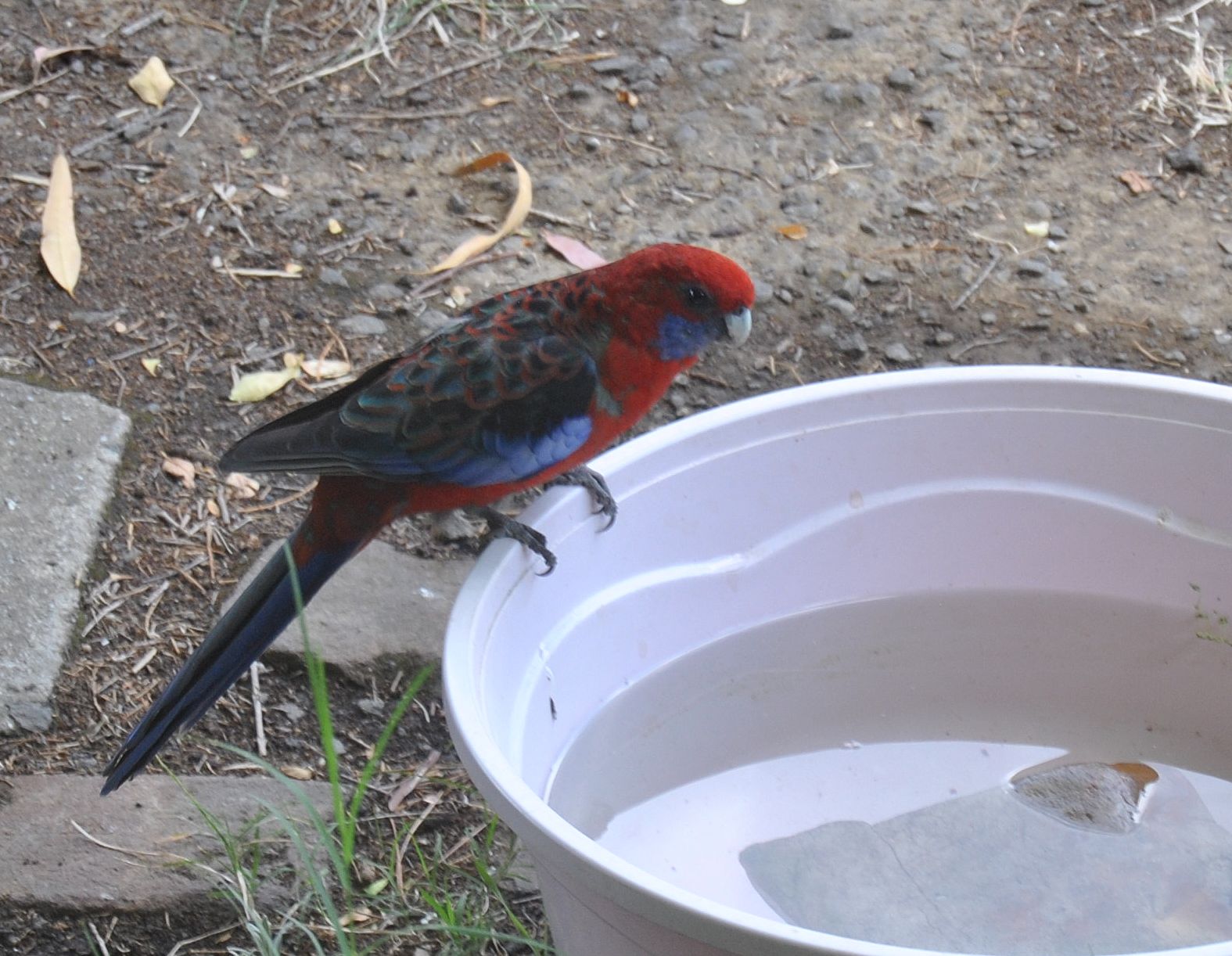
crimson rosella sitting edge water dish

crimson rosella


Apparently, crimson rosellas belong to the Blue-cheeked Rosellas,  which also include yellow, and orange, forms. Just imagine this bird with either orange or yellow in every feather that is not black or blue.  I’m hoping to see a yellow one when I’m in the Lachlan River area later in the month.

A pairing of a red and a yellow bird will produce orange offspring – called Adelaide Rosellas.     😮

Birds in Backyards  says …

There are several populations of the Crimson Rosella. Red (crimson) birds occur in northern Queensland, in southern Queensland to south-eastern South Australia and on Kangaroo Island. Orange birds are restricted to the Flinders Ranges region of South Australia, while yellow ones are found along the Murray, Murrumbidgee and neighbouring rivers (where yellow birds meet red birds they hybridise, producing orange offspring). Red birds have been introduced to Norfolk Island and New Zealand.
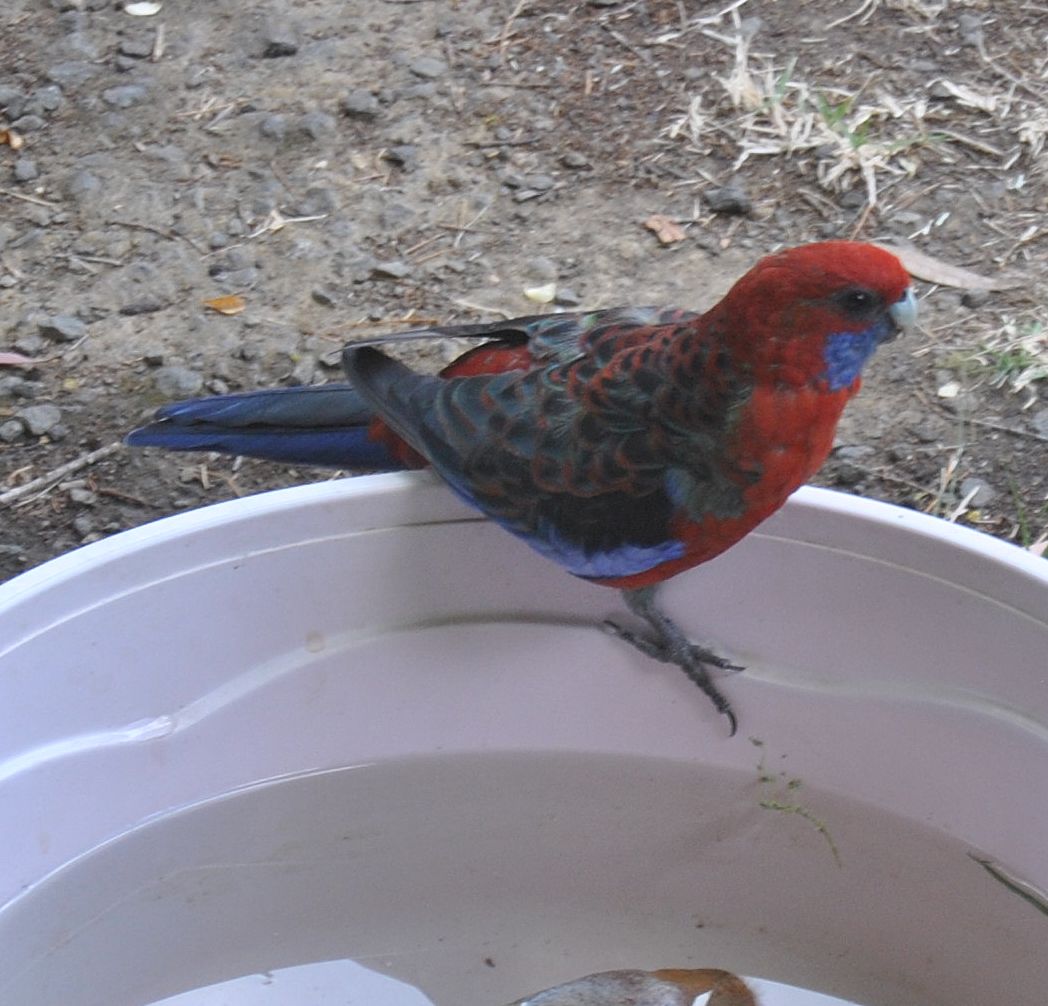
 

Crimson rosella, reluctant to use the rock

Crimson rosella, reluctant to use the rock


I sharpened the images – trying to counteract my dirty window . I’ll have to clean a few in the morning.

Hope you are having a good day.   🙂


Standard
Birds

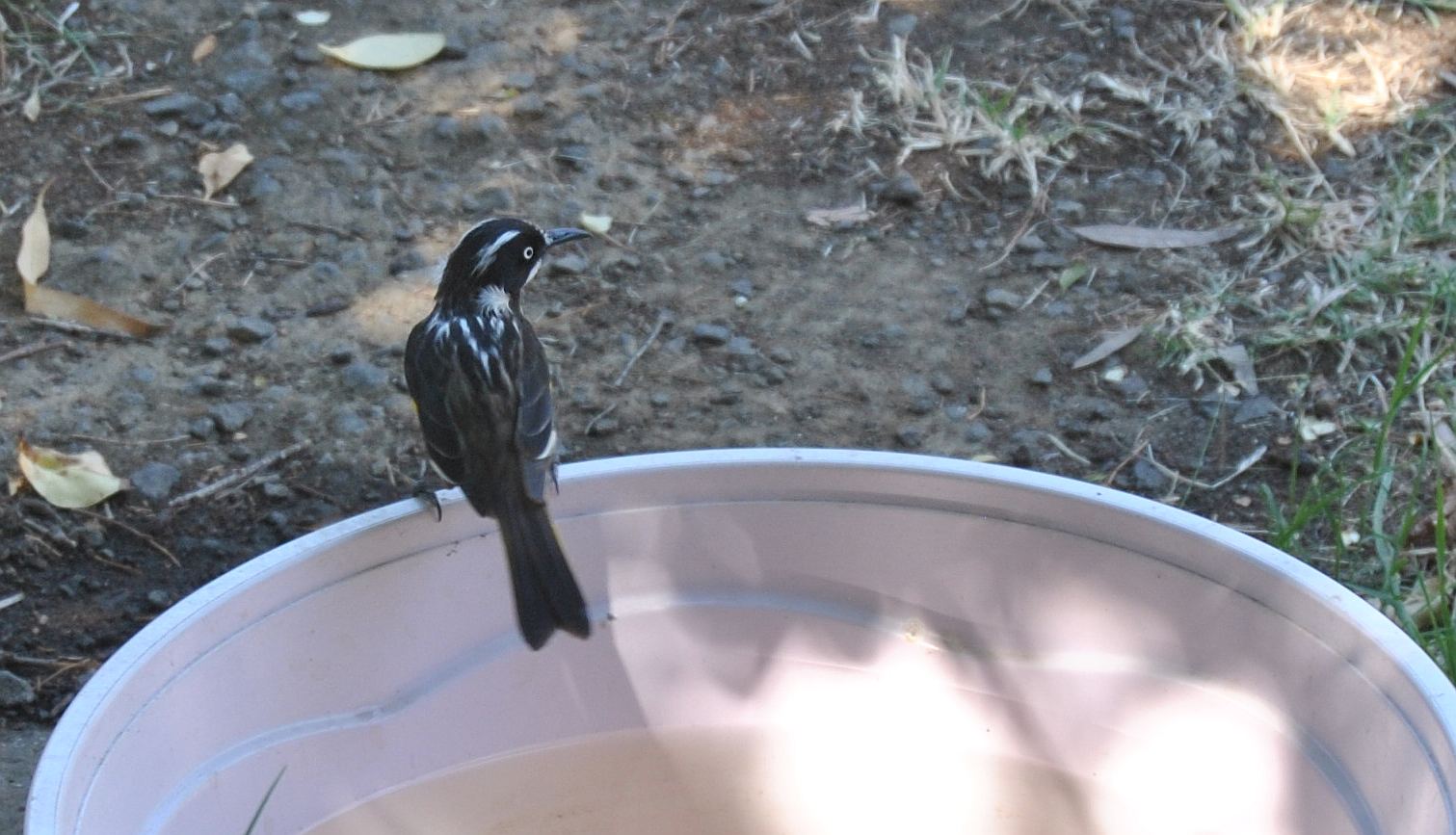
New Holland Honeyeater

I have the water bowl a little fuller than usual today. The current temperature is about 37 C, so the water gets a more attention than usual.

While I was watching fairy wrens, this New Holland Honeyeater flew straight to the bowl, jumping in and out a few times before it worked out the rock was still there, just  a little deeper.

New Holland Honeyeater on water bowl

New Holland Honeyeater


These birds are called New Holland Honeyeaters – Phylidonyris novaehollandiae  – because they are one of the first birds to be scientifically named in Australia, then known as New Holland.

It’s Aboriginal name is Bandin (ban’deen), and is also the name given to the white-cheeked honeyeater.

They are up to 20cm long (7.87 inches) with the female often smaller than the male.


New Holland Honeyeater drinking

New Holland Honeyeater


He conveniently poses for the Nikon D3000. If I had cleaned my kitchen window, I would have a sharper image. I love this camera!   ❤


New Holland Honeyeater on edge of water bowl

New Holland Honeyeater


 Thanks for dropping by.   Do have a good weekend.   🙂


Standard
Birds, Other Stuff

On my walk this morning …

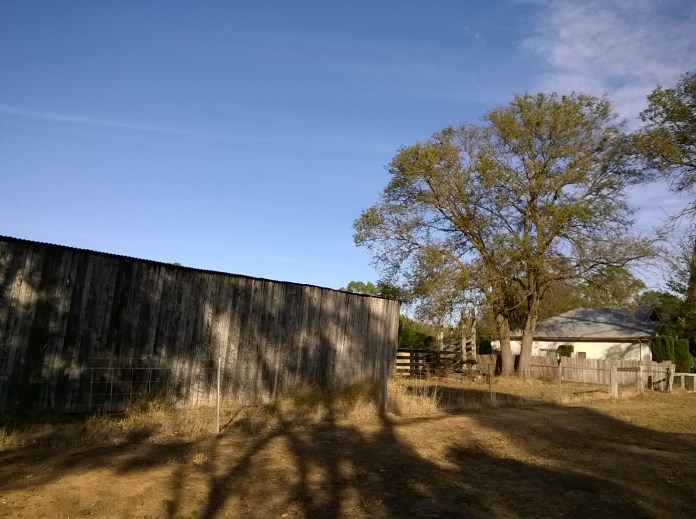
It began as usual, early. The dog and I walked as far as we could go to our right after leaving home  – not far. I decided to take a photo in all four directions from that spot.  The directions are approximate.  (Nokia Lumia 530 windows phone)

looking east, gums and poplars

Looking East


looking North, houses, elm, road

Looking North


looking South, trees, paddocks

Looking South


And, turning West, I decided it wasn’t such a good idea since you mostly get the back of the hay shed, but …

looking West, the back of a hayshed, house, elm, stockyards

Looking West


Now, I know you know that there is an owl in this walk – presuming you see the Featured Image at the beginning of the post.  Three-quarters along the service road is a large oak tree and the birds were pretty active else I would never have noticed the pair of owls.

A crow was cawing, magpies warbling and the pair of lorikeets were chitter chatting raucously in a nearby flowering gum tree. And there they were – a pair of owls! To say I was astonished would be an understatement.


pair of owls

Australia’s largest owl – the Powerful Owl

Lucky for me they were still there when I finished walking Vika. I grabbed the Nikon D3000 and returned. Glad I don’t have to show you the grainy phone  pictures I took.

If you are not squeamish, do follow this link to a page with the full photos.

The owl on the right is holding something quite dead. That was okay until I noticed giblets hanging. Yuk. Okay, but could that be head dangling!  Yukky yuk. So, your choice!


Birdlife Australia says …

… Its main item of prey is possums of various species… They roost by day, perched in the dense shade of a tree, often with the previous night’s prey held in its talons; this is when Powerful Owls are seen most often…


Well, there you go, then. Not a strange sight at all. I would never have noticed them if other birds were not so active nearby. 

Powerful Owl, with Prey

Have a good day.    🙂


Standard