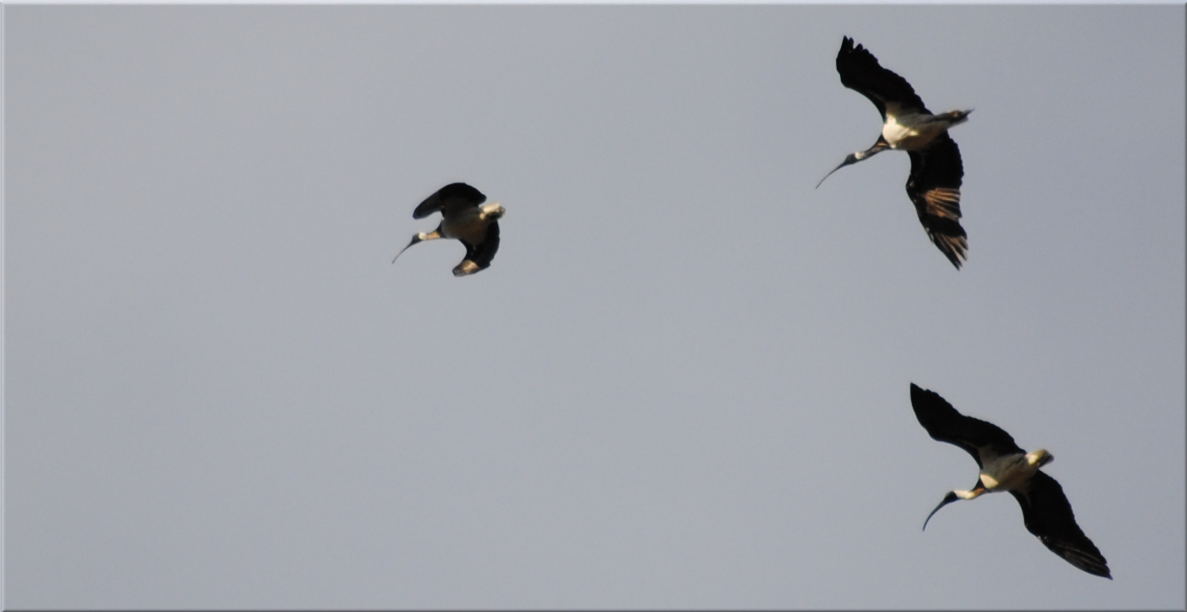
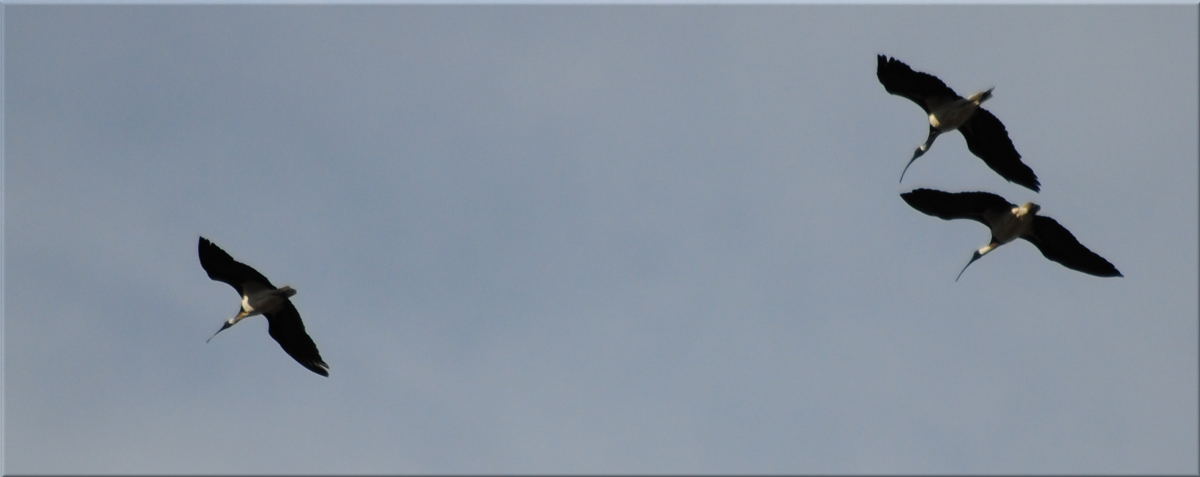
While I was taking photos of the Teddy bear Bee the other day, these three Straw-necked Ibis flew overhead. The Nikon focused on them easily for a change. Single birds often elude the lens and are gone before the camera locks on, and other times the results are not worth sharing. I like these ones.

straw_ibis

You can tell these birds aren’t White Ibis as they have black wings in flight. The wing undersides of White Ibis are white. You can even see the yellow throat-plumes that gives the bird its name – Straw-necked Ibis.
straw_necked_ibis

They travel all over mainland Australia, except for the arid parts. I don’t normally see large flocks here, but have once or twice. They love grasshoppers and locusts, and so are nick-named Farmer’s Friend.
straw_necked_ibis2

It’s lovely to see blue skies. Today is dull, wet, and dreary. It rained all night. The rain gauge says we’ve had well over 2 1/2 inches since it started yesterday. We’ve had the Autumn break early, methinks. The paddocks have already greened up with the rains we’ve had during February.

The forecast is good, though, with the weather clearing by tomorrow. Just as well, for we are attending a Back-to, a celebration of 150 years for Rupanyup, my mother’s hometown. Affectionately known as Rup, the small rural town holds fond memories of visits to my Grandma. We’re taking the camper. Let’s see how my newfound blogging resolve holds up! According to one website ‘the Ibis is a symbol of communication, probing, transition and trust.’ Apt.

Thanks for visiting.

🙂

Birds

Threskiornis spinicollis: Straw-necked Ibis

Image

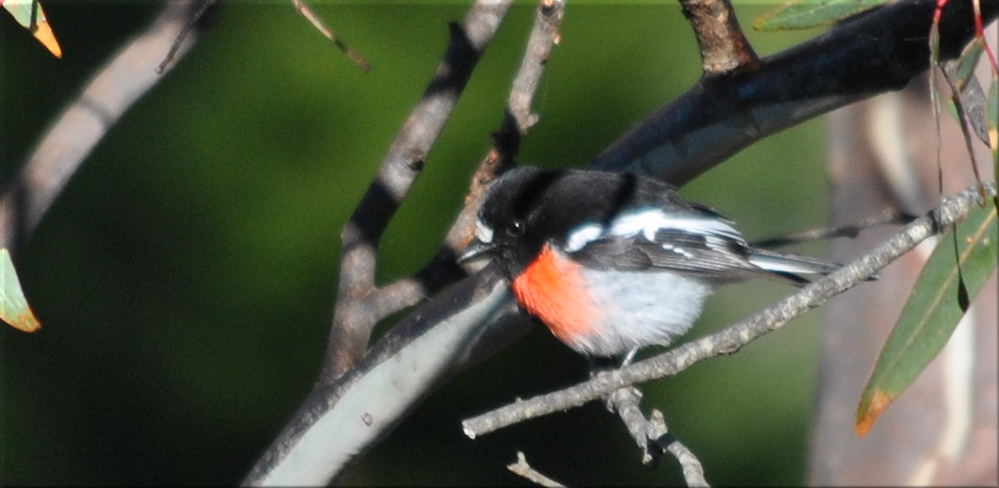
I rarely see a Scarlet Robin around here, so I was stoked to see a few at Rocklands Reservoir. They were hard to photograph. Fortunately, this one decided to keep still.

scarlet_robin1

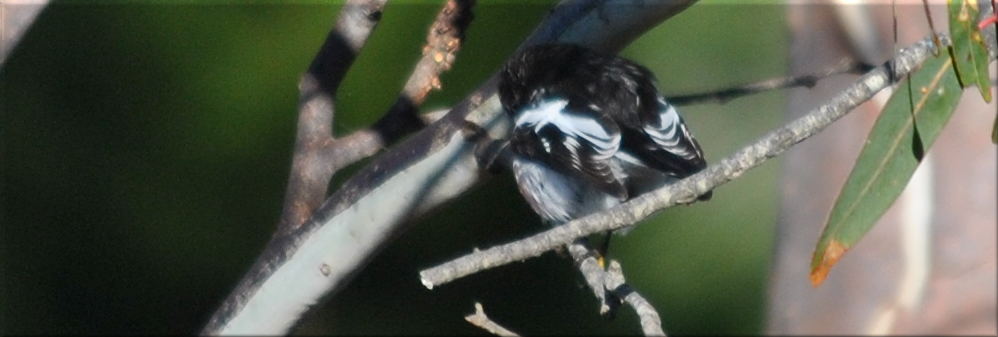
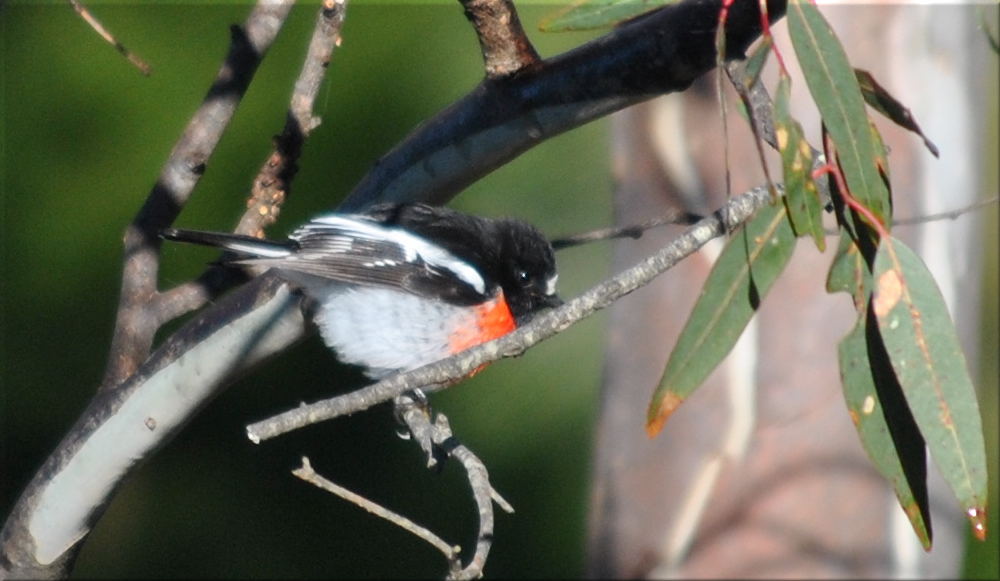
The Scarlet Robin frequents southern Australia and Norfolk Island, but they can also be seen in other parts of the south-western Pacific – from Bougainville and the Solomon Islands to Vanuatu, Fiji and Western Samoa. We see them most during winter as they favour open farmland and urban areas that time of the year. The female is less showy. We usually call them Robin Red Breasts, and I see they are far brighter than their counterparts in the Northern Hemisphere.

scarlet_robin4

scarlet_robin3

scarlet_robin

Thanks for looking.

🙂


Birds

Petroica boodang: Scarlet Robin

Image

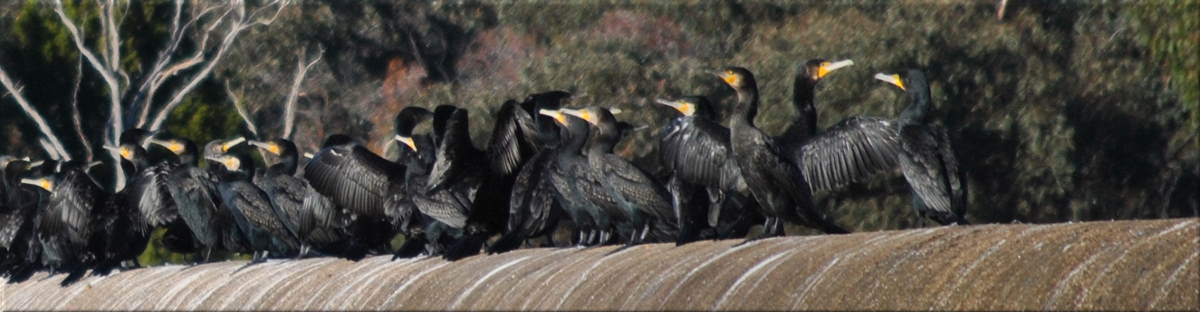
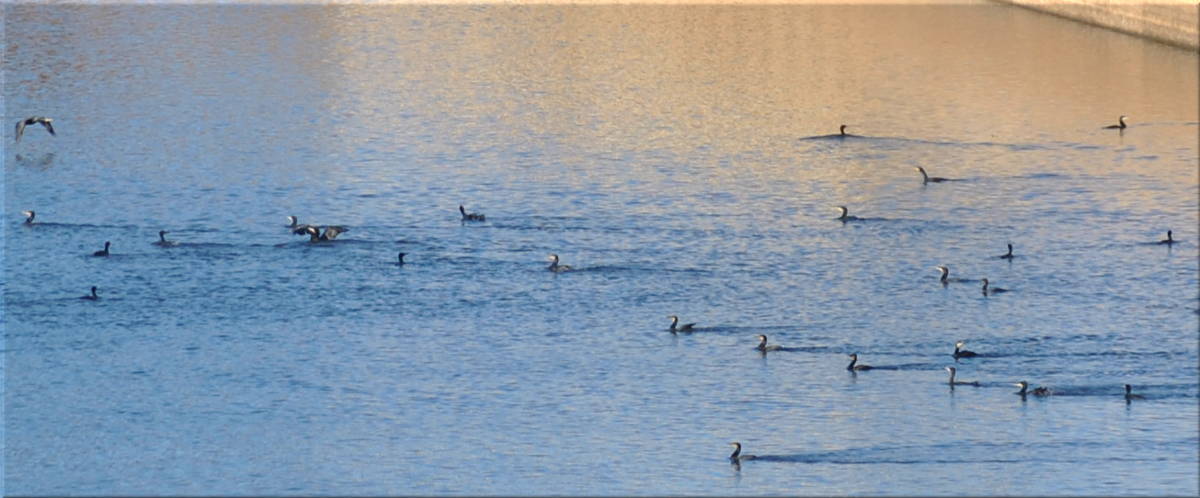
I’d never seen so many cormorants in one place before. Earlier, before these photos were taken with the Nikon D3000, the water fairly boiled with the ducking and diving going on as the Great Cormorants fished. The number of birds dwindled as the sun rose, and they didn’t particularly like me close.

cormorants

I found a site – Do you know your cormorants? for identification, since I’ve grown up calling all types the generic ‘shag’. Waterbirds didn’t feature in my youthful bird-watching days – apart from the ones which visited farm dams.

cormorants3

The Great Cormorant is all black with a yellow patch on its face. Apparently, during breeding season, the yellow is bordered by white, and a white patch appears on the flanks

cormorants2

Range: North America, Europe, Africa, Asia, New Zealand, Papua New Guinea and Australia.

cormorants4

Thanks for looking.

🙂

Birds

Phalacrocorax carbo: Great Cormorants

Image