

Taken yesterday with the Nikon D3000.
This one of the four crimson rosellas that often take refuge from the heat in the tree against our kitchen wall. Because of the spattering of olive colouring, this is an immature bird. They take about 15 months to reach full plumage.
Average size: about 34cm (13.38 inches)
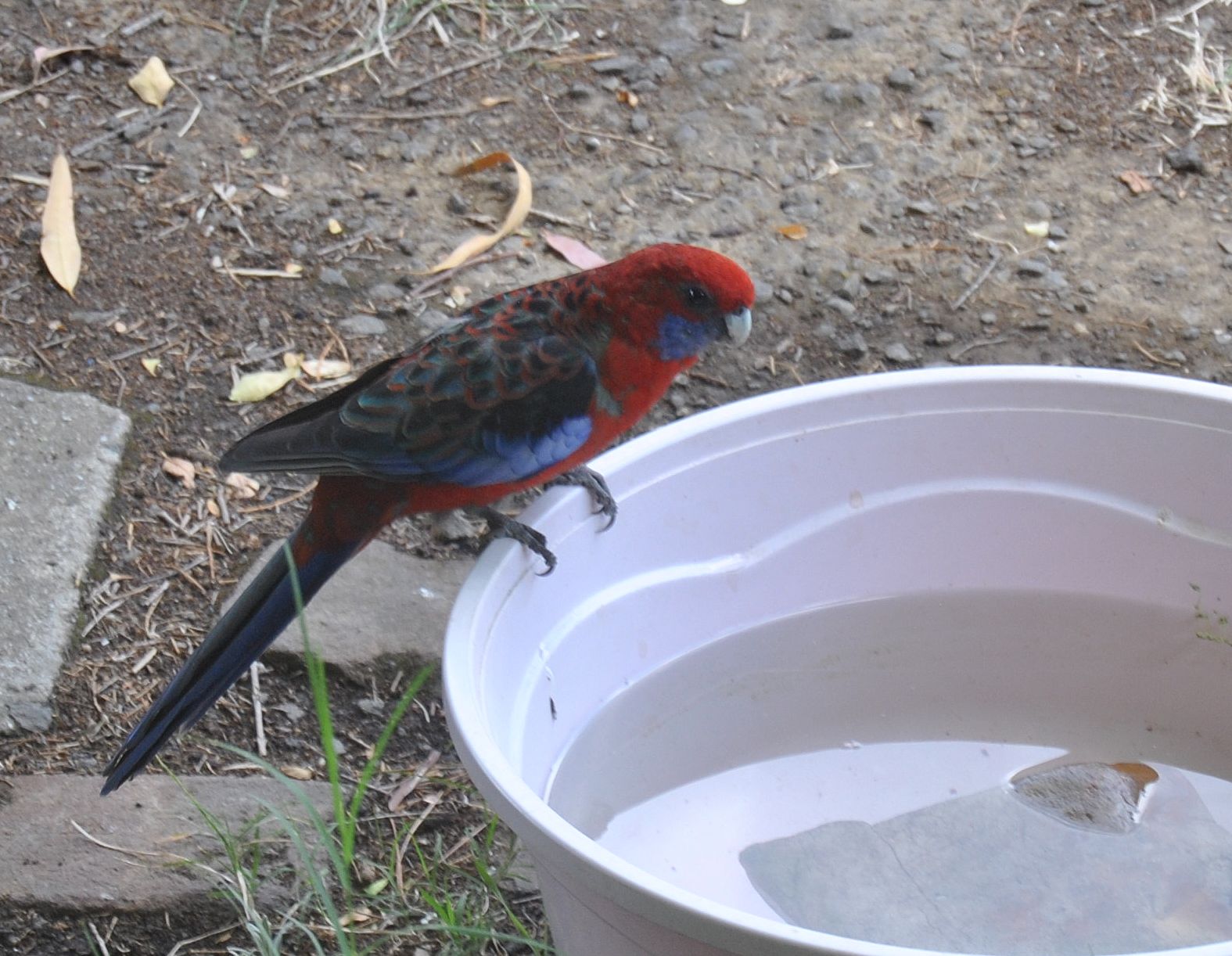
crimson rosella
Apparently, crimson rosellas belong to the Blue-cheeked Rosellas, which also include yellow, and orange, forms. Just imagine this bird with either orange or yellow in every feather that is not black or blue. I’m hoping to see a yellow one when I’m in the Lachlan River area later in the month.
A pairing of a red and a yellow bird will produce orange offspring – called Adelaide Rosellas. 😮
Birds in Backyards says …
There are several populations of the Crimson Rosella. Red (crimson) birds occur in northern Queensland, in southern Queensland to south-eastern South Australia and on Kangaroo Island. Orange birds are restricted to the Flinders Ranges region of South Australia, while yellow ones are found along the Murray, Murrumbidgee and neighbouring rivers (where yellow birds meet red birds they hybridise, producing orange offspring). Red birds have been introduced to Norfolk Island and New Zealand.
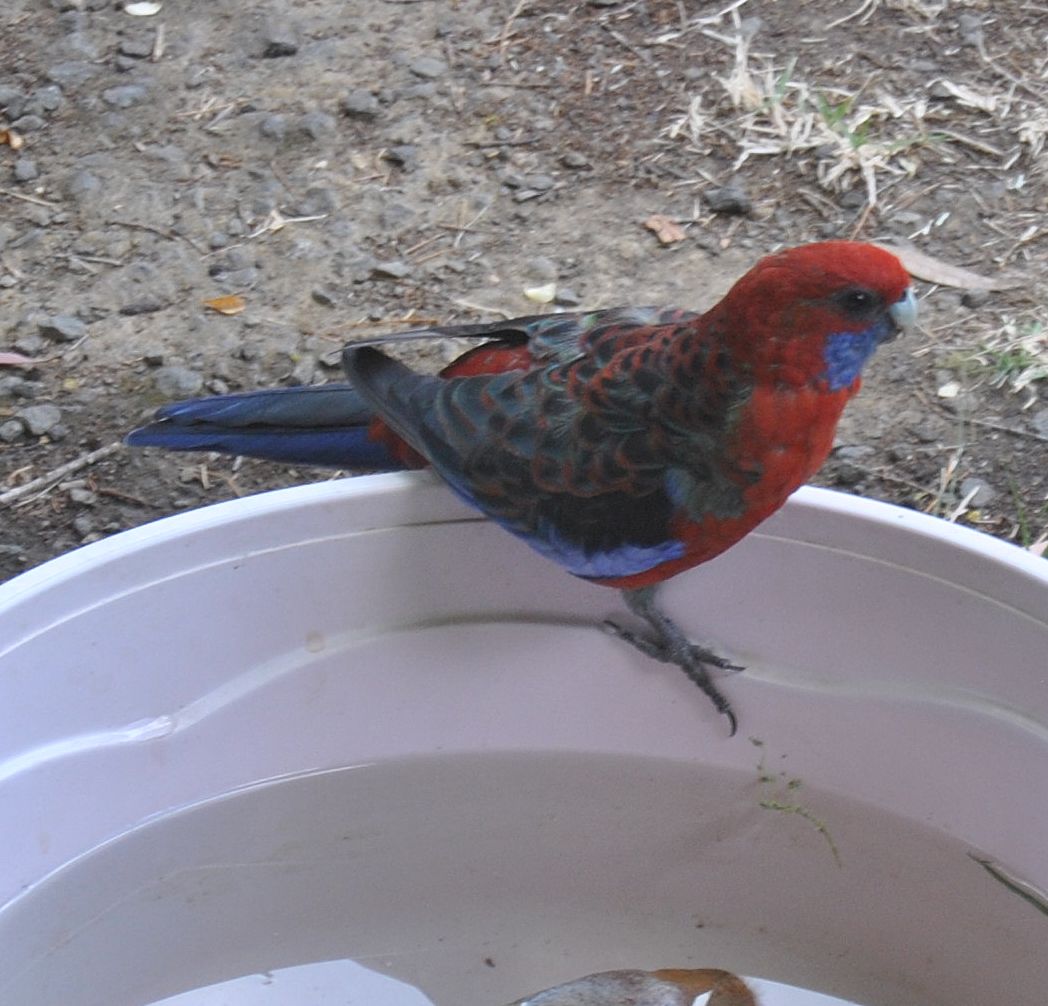
Crimson rosella, reluctant to use the rock
I sharpened the images – trying to counteract my dirty window . I’ll have to clean a few in the morning.
Hope you are having a good day. 🙂


 Christine R
You must be logged in to post a comment.